In honor of the Labor Day weekend and the coming of Fall, it is time to think about turning leaves, hot drinks, and, of course, respiratory infections!
Three vaccines are being offered this year, and while they all protect against important respiratory infections, they could not be more different. The differences extend beyond their varied uses, technology, and target populations, and include the potential cost! Given this, I think it is important to review this topic and help Pandemicpondering.com readers decide which vaccine(s) they need to get.
Influenza (Flu) vaccine. I will start with Flu vaccine since it is the oldest, simplest, and most broadly applicable vaccine. This vaccine is still made in eggs by infecting them with flu virus and then collecting the infected egg white. The virus is killed with chemicals and concentrated. There are four flu viruses in this year’s vaccine including two types of influenza A and two types of influenza B. Of interest, one of the A and both B strains are the same as last year, suggesting the same viruses are still hanging around, possibly because we did not have much of a flu season last year.
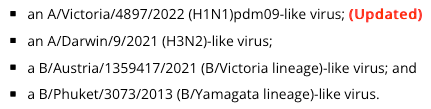
Everyone should get the Flu vaccine, particularly young children, and those over 65 years. The “oldsters” often do not respond well to flu vaccines, so they should get a special version that has twice the dose of the regular vaccine. I would aim for October to get immunized since that timing makes the immunity highest during the winter.

Although the vaccines are made in eggs there is now data that egg allergic people can tolerate them without a problem, and the CDC recommends them for all without special precautions. For those who are concerned, there is a recombinant protein vaccine made in tissue culture which contains a single viral protein (hemagglutinin) from each of the four influenza viruses. However, it may be harder to find than the egg-based vaccine.
COVID-19 vaccine. A new COVID-19 vaccine should be available by mid to late September. It will be a single dose booster vaccine corresponding to the XBB.1.5 omicron COVID-19 virus (but it should also protect against the current BA.2.86 virus causing infections in the U.S. (I could write a whole article about how these names are derived, but I doubt anyone cares anymore!) There will be three types of vaccines: RNA vaccines from Pfizer and Moderna, and a recombinant protein vaccine from Novavax. The protection offered by all three vaccines should be similar, so the Novavax vaccine should be an important alternative to individuals who do not want the RNA based vaccines.


As a population we are currently well immunized against COVID-19. These new vaccines can prevent new COVID-19 infections for a short period of time, likely six months, but even if young people do not get vaccinated, they aren’t getting very sick from COVID at this point. However, if you are over 65 years of age and have heart or lung disease, or suffer immune problems, this vaccine is a must.
RSV vaccine: The newest vaccines protect against the respiratory syncytial virus or RSV. RSV is the respiratory disease that is particularly dangerous in infants and young children, and in elderly people with lung disease. Two vaccines have been recently approved for individuals over 60 years of age: Arexvy from GSK and Abrysvo from Pfizer.
While these vaccines both contain similar recombinant proteins corresponding the F protein of RSV, the GSK vaccine contains a chemical called an adjuvant that intensified the immune reaction to the vaccine. The GSK vaccine showed higher levels of protection in trials than Abrysvo and somewhat increased local reactions, but it is difficult to compare the two vaccines because the trials were conducted differently.
This vaccine is particularly for adults over 60 with heart and lung disease, immune problems and people living in group health facilities (nursing homes). It is not recommended for children, who are now being protected or treated with antibody therapy.
The biggest problem with these vaccines may be their cost! It turns out that despite supporting their use the Centers for Disease Control and Prevention’s Advisory Committee on Immunization Practices is not making these vaccines a universal recommendation. Instead, the A.C.I.P. recommendation for the R.S.V. vaccine put the final decision in the hands of individuals in consultation with their doctors, which means some insurers won’t cover the $300+ cost. While Medicare Part D will cover this, the more common private insurance Medicare Part B often will not. So you need to contact your insurance provider to make sure.
Of interest, it is not clear if it is a good idea to get any of these three vaccines together. There is some data suggesting poorer responses to each vaccine if given together, but this is not definitive. If you plan to get all three vaccines it might be prudent to separate each one by a couple of weeks.
I hope this helps your decision making!
 Pandemic Pondering
Dr. Baker Many thanks for this information and for your continuing blog. Bob Ause, Sr.
Sent from my iPhone
>
LikeLike
Me too! I read this..th
LikeLike
Did I miss the mention of when to get the RSV vaccine / when it will be available?
LikeLike
Available now.
LikeLike
Really helpful Jim! Thank you.
LikeLike